The Practice Is Still Here
We’ll be closed tomorrow for the incoming snowstorm.
Knowing a storm was coming today — and being a bit under the weather myself — I debated canceling class this morning as well. I assumed no one would show up and let one very dedicated student, who travels over an hour each way to get here, know that it might not be worth the trip. Now I regret that message a little, because another student also drove over an hour each way to practice this morning.
This winter has required more flexibility than I expected. One of our teachers has been away for part of the season, and the steady rhythm of extreme cold, snow, and ice has made it difficult — and sometimes unsafe — for another to make the drive, especially if only one student is likely to show up. There have been more cancellations than I would like.
And yet this morning, one mat rolled out beside mine.
If you’ve been practicing Ashtanga for a while, you know that the tradition emphasizes daily practice — consistency, showing up again and again. I believe in that. When I’m practicing daily — even if it’s just sun salutations and closing — I feel better. Clearer. More even. I make better decisions. There’s a steadiness that builds.
But life has a way of rearranging our plans.
I’ve stepped away from practice more than once. My first major break was when I had to take six months off after shoulder surgery from a snowboarding injury. I took the first trimester of my pregnancy off and also the first 2 months after my daughter was born — periods that are traditionally prescribed breaks in Ashtanga. I’ve also had plenty of days, weeks, and months when practice had to take a back seat for one reason or another.
Those times taught me something important. They showed me what it feels like to step away and return — and to discover that nothing essential has been lost. The well is still there.
My practice hasn’t advanced in the strictly linear way that someone practicing daily for years on end — moving steadily through third or fourth series — might have advanced. I’m human, and sometimes that still disappoints me.
That kind of consistency builds depth and strength, and I respect it deeply. But depth doesn’t only show up as new postures. It also shows up as returning, as staying in relationship with the practice through different seasons of life, as knowing in your bones that you can step away and come back without fear.
When my daughter was teething, I took a full year off. Not because I didn’t try. I would wake up early, quietly creep out of the room to my mat — and without missing a beat she would wake up and need me. And when a small child needs you, that is the practice.
I’ll be honest — during that year, I sometimes felt like a failed Ashtangi. The culture I was raised in was clear about daily practice, consistency, seriousness. Stepping away for that long felt, in some quiet internal way, like falling short. Even though I had already learned from earlier prescribed breaks that the well would still be there, the old messaging lingered.
But when I returned, nothing essential had disappeared. The source doesn’t vanish because you pause. Maybe the ground feels firmer when you come back. Maybe you have to dig a little. But the water is still there.
The daily practice in Ashtanga is often framed as discipline — and it is. In yogic language, we call it tapas — the steady heat that transforms. But tapas isn’t punishment. It isn’t perfection. It isn’t fear-based consistency. And the practice is not meant to be a stick with which you beat yourself. Discipline should build you, not shrink you. Tapas is the quiet willingness to show up again and again — not the voice in your head telling you you’re not doing enough.
Hosting a Mysore program here, I want it to honor that spirit of consistency. Not rigid attendance, but steady relationship. Showing up when you can. Returning when you’ve stepped away. Knowing that the door is here. I also want it to empower people to develop a self practice - one that you can do anywhere with or without the support of a teacher and the energy of other people in the room.
If you ever need a space to practice up until 10 AM, our doors are almost always open. And if we’ve posted that we’re closed, you’re welcome to text and check in to see if the space is still available. Sometimes “closed” simply means we’re adjusting to conditions — not that the practice doors are firmly shut.
Ideally, this is a daily practice. And daily practice will often mean practicing at home — alone, in a hotel room, between a bed and a dresser, or on a snow day when the barn here is unreachable if you don’t live right next to it.
Whether you consider yourself a daily practitioner right now or not, I’ll offer you this: tomorrow, do one sun salutation. Just one. One is infinitely more than zero.
Consistency builds something subtle and strong. But missing a day — or a week, or even a year — does not disqualify you.
You step away. You come back. You keep digging.
The practice and its benefits don’t disappear.
November Updates
Schedule for November: * New Led Class: Saturdays 9 AM beginning November 8th *
Moon Days (No Practice): Wednesday, November 5th (Super Moon!) and Thurdsay, November 20th. There will also be only self practice on Friday, November 14th.
Sundays: 8:30 - 10 AM
Mondays: 8:30 - 10 AM
Tuesdays: 8:30 - 10 AM
Wednesdays: 8:30 - 10 AM Mysore with Mary
Thursdays: 8:30 - 10 AM Self Practice
Fridays: 8:30 - 10 AM Mysore with Kathy
* NEW * Saturdays: 9 - 10:30 AM Led with Mary
On Thursday night my husband, 14 year old daughter, and I went to a ghost tour at The Mount in Lenox. As we heard stories of dark eyed spirits lurking in the stable’s attic corners just above us, shivers ran up my spine and the hair on the back of my neck started to rise. It made me realize how great it feels to get scared - especially if you step out of your head and into your body as the sensation arises. Because that feeling is the feeling of being deeply lit up and alive. It can be woken up by darkness and fear and it can be lit up in so many other ways.

This got me thinking about the benefits of fear, and the fear that sometimes comes up in practice as you learn to drop back into a deep backbend, or touch your head down in prasarita padotasana for the first time, when you didn’t think you could and you’re sure you’ll fall over. And it got me thinking of the first time I practiced Ashtanga and felt like I’d taken ecstasy on my way home on the train from Brooklyn to Manhattan. All of this energy that hadn’t really been moving had suddenly started moving and it felt so good.
Sure you can hop on a roller coaster, watch a scary movie, or go to a haunted house to get a quick fix of energy running up your spine. Or you can learn how to wake it up yourself with the tools we learn to use in the Ashtanga Yoga practice. Using our breath, bandhas, and drishti to focus and control our own energy. Waking our spines up so that energy flows throughout our bodies more efficiently. And most of all tuning in to everything that is already here within you.
With that I am happy to announce that Mary is going to offer a new led class on Saturday Mornings at 9 AM beginning on November 8th!
Led classes are a great way to learn the traditional Ashtanga sequence and count. For those of you more used to vinyasa classes where everyone is moving together and doing the same thing at the same time, this will feel very familiar.
Thursdays have been especially quiet since we started over 6 months ago so Mary will no longer be teaching on Thursdays but you are more than welcome to come and self practice with me and I’m more than happy to help you where you most need it. I will continue teaching on Fridays.
Moon Days in November are this coming Wednesday, November 5th (super moon!) and Thursday, November 20th. I will be studying with my teacher, Christine Hoar in Vermont the week of the 10th to the 14th so Friday, the 14th will be self practice.
Moon Days & Why We Rest

In the Ashtanga Yoga tradition, we observe rest days on the full moon and new moon. These “moon days” are natural times to pause. Lore has it that energy tends to be more unstable during these lunar phases, and skipping practice helps prevent injury, encourages internal reflection, and supports long-term sustainability in the method. It’s also just nice to have an extra prescribed day off every couple of weeks when you are practicing 6x a week.
At Ashtanga Yoga Great Barrington, we will not hold Mysore classes on the following moon days:
Upcoming Moon Days (2026):
Tuesday, March 3 – Full Moon
Thursday, January March 19 – New Moon
Thursday, April 2 – Full Moon
Friday, April 17 – New Moon
Take these days to rest, reflect, or sit quietly with your breath.
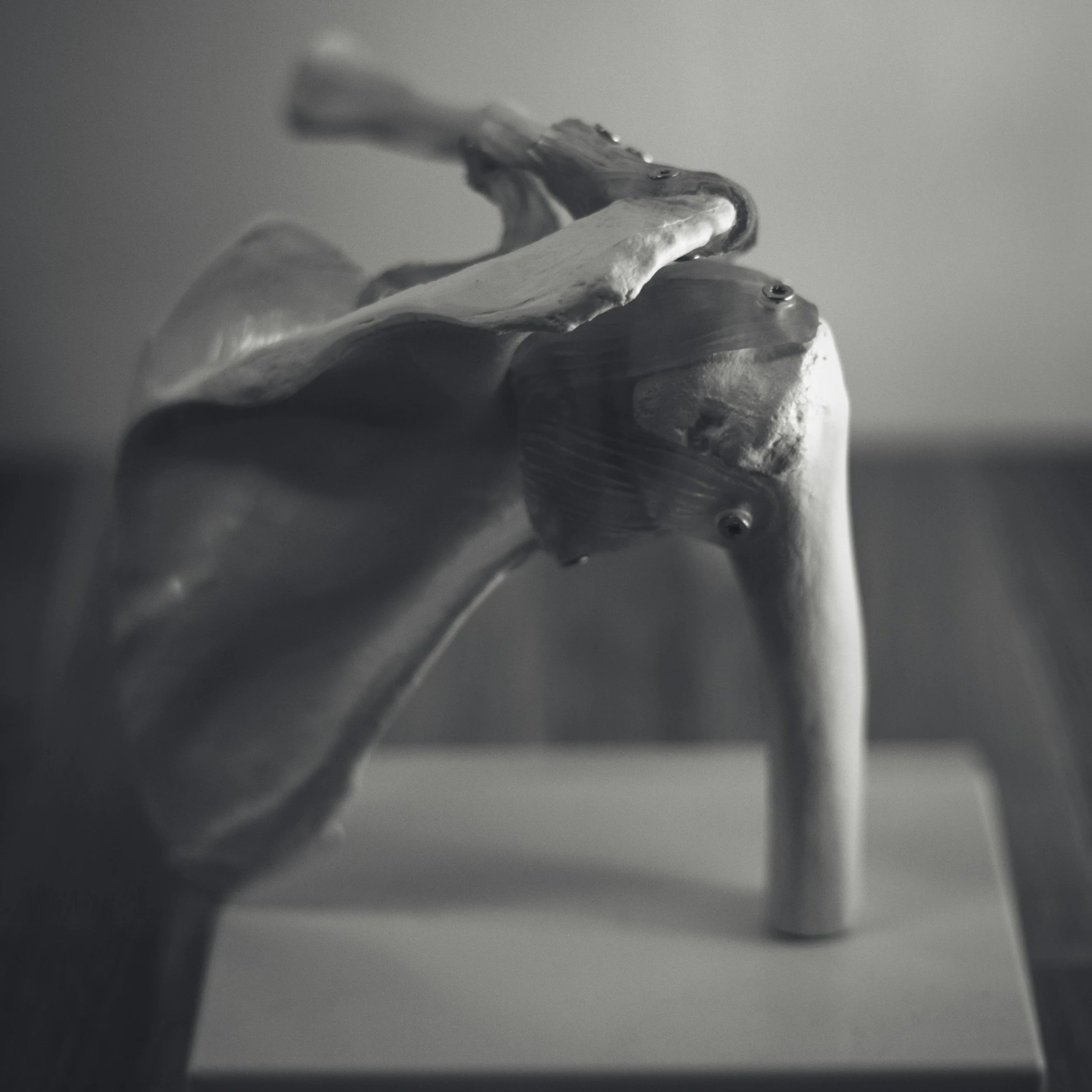
Shoulder Injuries and Ashtanga Yoga: Is It the Practice or How We Practice?

I was recently talking to a friend who told me she had practiced Ashtanga for years earlier in her life, but eventually had to quit because she kept getting rotator cuff injuries. I could relate. I’ve had my fair share of injuries over the past 20+ years of practice—and they’ve forced me to question this method more than once.
And yet, I keep coming back to it. Ashtanga is my own personal Brokeback Mountain: I just can’t seem to quit it, even though I’ve tried. There’s too much I love about this practice—its rhythm, structure, breath, and the way it constantly invites me to look inward.
Ashtanga yoga is a dynamic, physically demanding practice built on repetition and discipline. But if you’ve heard someone say they had to quit because of shoulder injuries—particularly rotator cuff strain—you’re not alone. It’s a real concern, and one that deserves thoughtful attention.
I tore the labrum in my right shoulder learning to snowboard 17 years ago. It required surgery and six months off practice, followed by a long, slow return to the mat. Since then, I’ve had to be very conscientious about my shoulders—modifying when necessary and backing off any movement that aggravates pain. So far, that approach is working. It’s allowed me to sustain a practice I love, while respecting my body’s needs.
But Is Ashtanga Inherently Risky for the Shoulders?
The short answer is: not inherently—but how we approach the practice matters deeply.
Why Shoulder Injuries Happen
The shoulder is a complex joint, stabilized by a group of small muscles known as the rotator cuff. In Ashtanga, movements like chaturanga, upward-facing dog, and jump-backs/jump-throughs are repeated frequently. If performed with poor alignment or insufficient strength, these motions can lead to overuse injuries.
Here are a few common contributors:
Repetition without rest – Daily practice doesn’t leave much time for recovery, especially if you’re pushing through discomfort.
Misalignment in key poses – Chaturanga with flared elbows, sagging shoulders, or an unengaged core can place excessive strain on the rotator cuff.
Lack of individual adaptation – Traditional Mysore-style classes are powerful, but they rely on a teacher’s ability to tailor the practice to the individual.
Advancing too quickly – Students may move ahead in the sequence without the shoulder stability to support new movements, increasing the risk of injury.
A Sustainable Approach to Ashtanga
At Ashtanga Yoga Great Barrington, we honor both the tradition of this method and the uniqueness of every body that steps onto the mat. We believe yoga should support long-term vitality—not wear you down.
Here’s how we support shoulder health in our space:
Thoughtful modifications – Whether you’re healing or preventing injury, we’ll work with you to adapt your practice. That might mean skipping vinyasas, using props, or refining transitions.
Foundation in alignment – We teach shoulder mechanics from the ground up, especially in poses like chaturanga and upward dog.
Strength before progression – You don’t need to be “strong” to start, but we’ll help you build strength safely and progressively.
Open communication – We welcome conversations about past injuries and current concerns. Your experience informs how we teach.
You Can Come Back—Safely
If you’ve stepped away from Ashtanga because of injury, you’re not alone—and you’re absolutely welcome here. With the right guidance and a practice rooted in awareness, Ashtanga can be not only safe, but healing, empowering, and deeply personal.
It’s not about pushing through pain. It’s about meeting yourself, every day, exactly where you are—with breath, with presence, and with care.
We’re here to support that.
Thinking of returning to the mat after time away?
We’d love to meet you where you are. Come try a class, reach out with questions, or just stop by the barn and say hello.